
Finding the Words
The dominant theory of AI prompting failure: you're not asking clearly enough. Be more specific. Structure your instructions. Use the right framework.
But what if clarity isn't the binding constraint? What if the actual barrier is that you don't have the words yet?
This is the work we do every day. Teams come to us with copy that isn't landing. Their instinct is to stack: “we need to make it urgent and personal and concise and warm”. But those aren't additions. They're tradeoffs. Urgent often means not personal. Concise often means not warm.
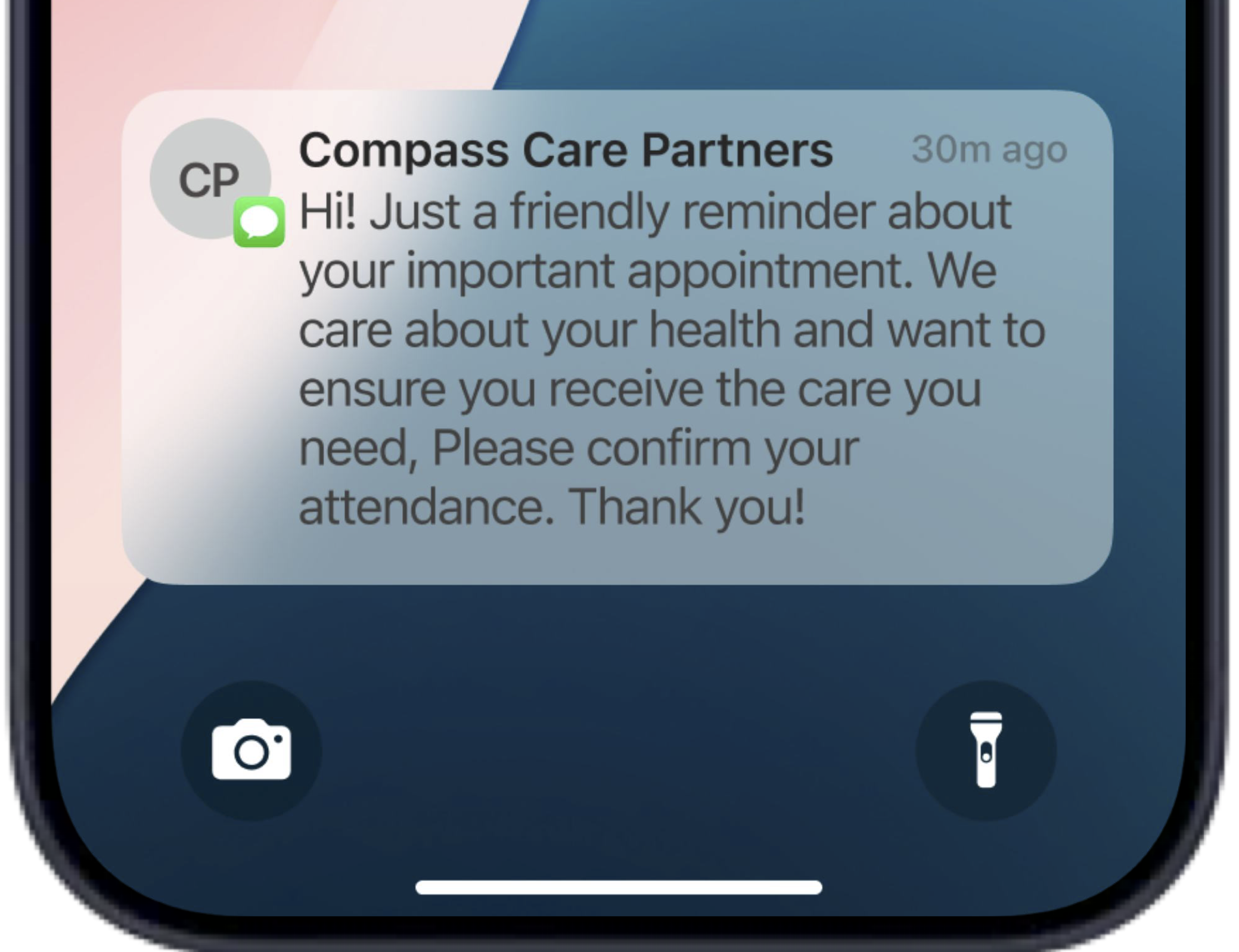
When you ask for everything, you get: "Hi! Just a friendly reminder about your important appointment. We care about your health!"
I notice this in my own writing too. I was trying to define "texture"—something I could feel but couldn't name. The phrase "fragments that carry feelings without needing to explain why" wasn't in my head when I started. It emerged the same way our clients find their copy: reaching, reacting, trading. Not that. Closer. What if we tried? There.
Examples like Hilary Gridley's AI Steering Wheel help with this, giving us vocabulary and tools for the direction we want to move. We can integrate this to focus the emotional architecture of our messaging.
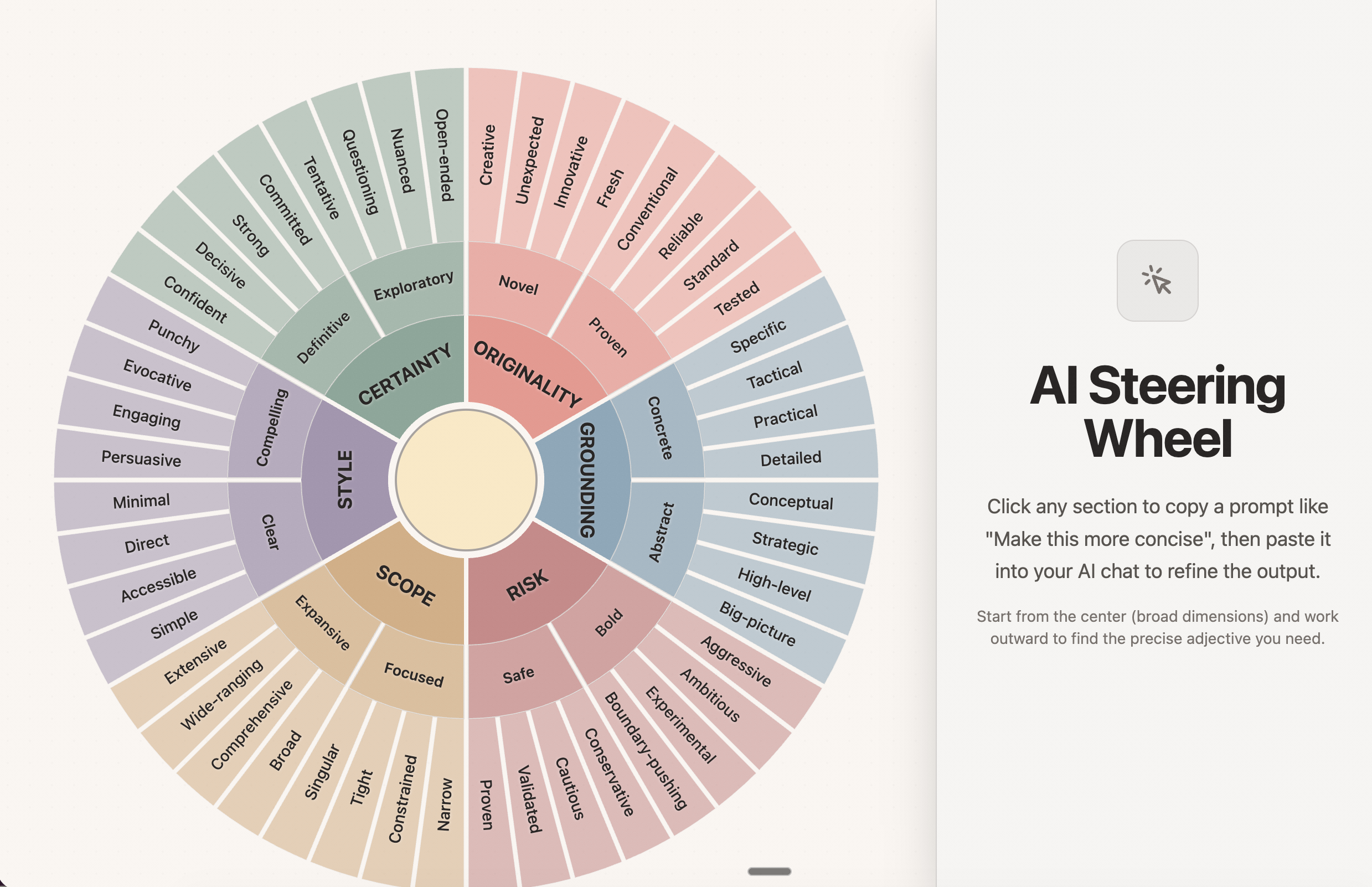
Image of Hillary Gridley’s AI Steering Wheel
But most people aren't looking for a steering wheel. They're typing and accepting. The gap between those who find the words and those who take the first ones is about to get very visible. The phrase you need might not be in your head yet. That's not a failure of clarity. It’s actually where the work starts.
The real work is triangulation. You pick one quality, see what it produces, then trade. Urgent gets you stakes but loses warmth. Personal gets you connection but loses weight. So you try: personal with stakes. Closer. Personal with stakes and specificity. There it is.
This is why patient communication all sounds the same, and why so much of it gets ignored. Teams are stacking adjectives instead of making intentional choices. The message that lands isn't the one that tries to be everything. It's the one that knows what it's trading away.
The same pattern shows up in broader behavioral design. Teams come in saying "patients aren't engaging." But engaging is too broad, it doesn't point anywhere. The work is narrowing: not engaging to not completing. Not completing to not returning. Each word gets closer to the actual friction point. They weren't missing engagement. They were losing people in the gap between the first visit and the follow-up.